Kindred Construction and Urbanarium Explore the Realities of Mass Timber Feasibility Through Industry Collaboration
Lana Gill
Urbanarium’s Decoding Timber Towers is a global design competition that attracted 44 submissions from six countries, challenging teams to reimagine the traditional concrete high-rise as a mass timber–based, low-carbon, and cost-effective prototype. In essence, the competition aimed to demonstrate that mass timber can deliver scalable, affordable housing solutions in the high-rise sector. The results revealed bold, forward-thinking visions for sustainable urban towers that push the boundaries of what’s possible in modern construction.
Kindred Construction, recognized for its partnerships on several high-profile mass timber projects across Metro Vancouver, including 981 Davie and Vienna House, has built a strong reputation as a leading general contractor in the mass timber and sustainable construction sector.
“The organization’s commitment to challenging the status quo and exploring fresh solutions aligns perfectly with our work at Kindred,” remarked Matthew Reid, Chief Operating Officer at Kindred Construction, on what inspired the company to co-sponsor Urbanarium’s latest global design competition.
In September, Urbanarium announced the winning proposals of its Decoding Timber Towers Competition at an awards show co-presented by Kindred Construction and BC Housing, celebrating innovative, low-carbon high-rise concepts shaping the future of affordable housing.
Decoding Timber Towers: Global Design Competition Reimagines the Future of Affordable Mass Timber Housing
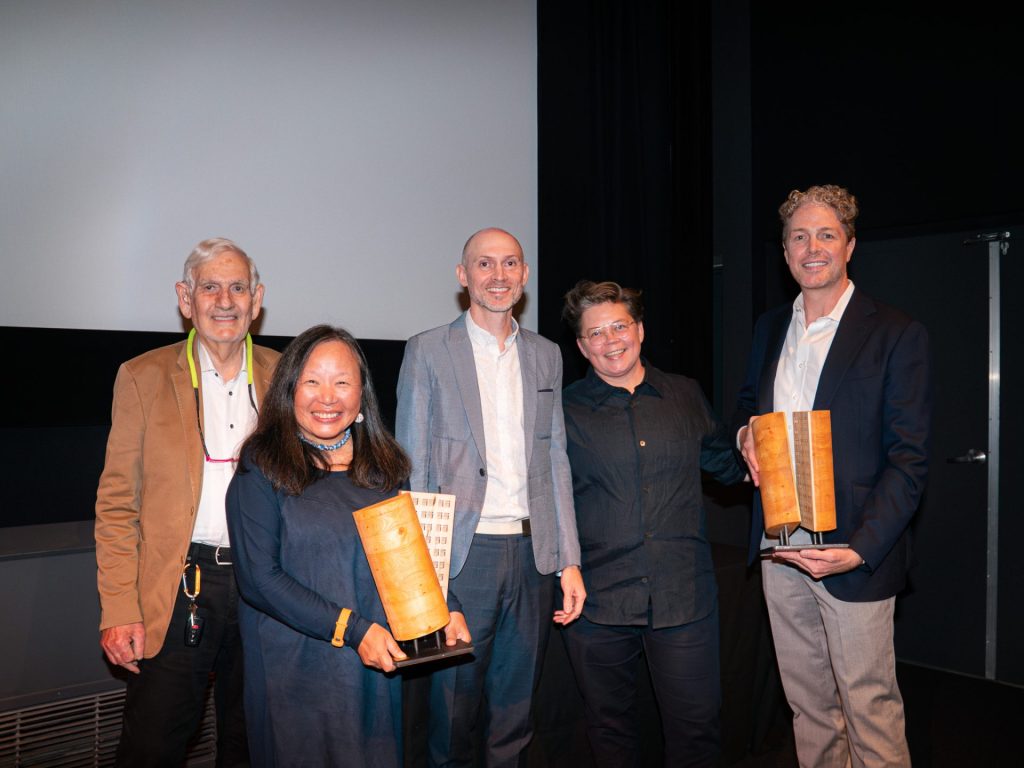
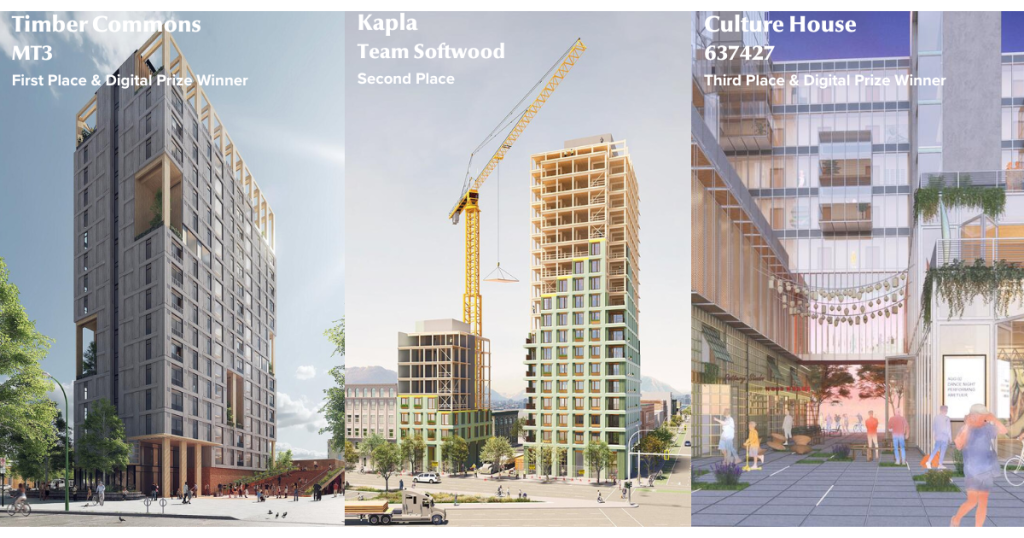
First place went to Timber Commons by Team MT3, recognized for its innovative modular and flat-pack design. KAPLA by Team Softwood earned second for its efficient 18-storey prefabricated concept, and Vancouver’s Culture House by Team 637427 placed third, tying for the DIGITAL Prize with its on-site prefabrication approach.
Photography courtesy of Urbanarium
“It was an inspiring evening celebrating fresh thinking and incredible talent within our industry,” said Matthew, emphasizing the importance of supporting initiatives that advance sustainable building methods and demonstrate their scalability across all building types.
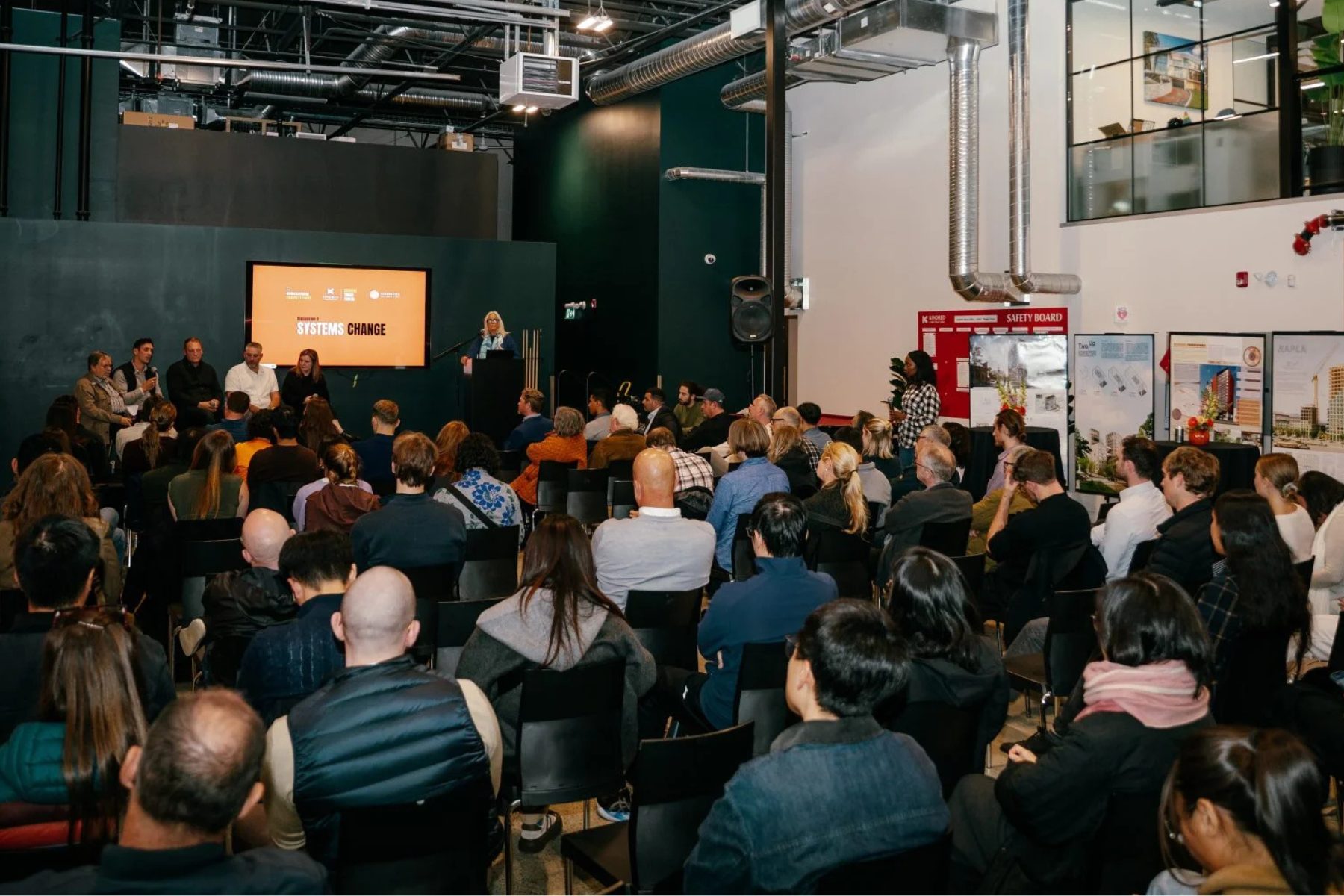
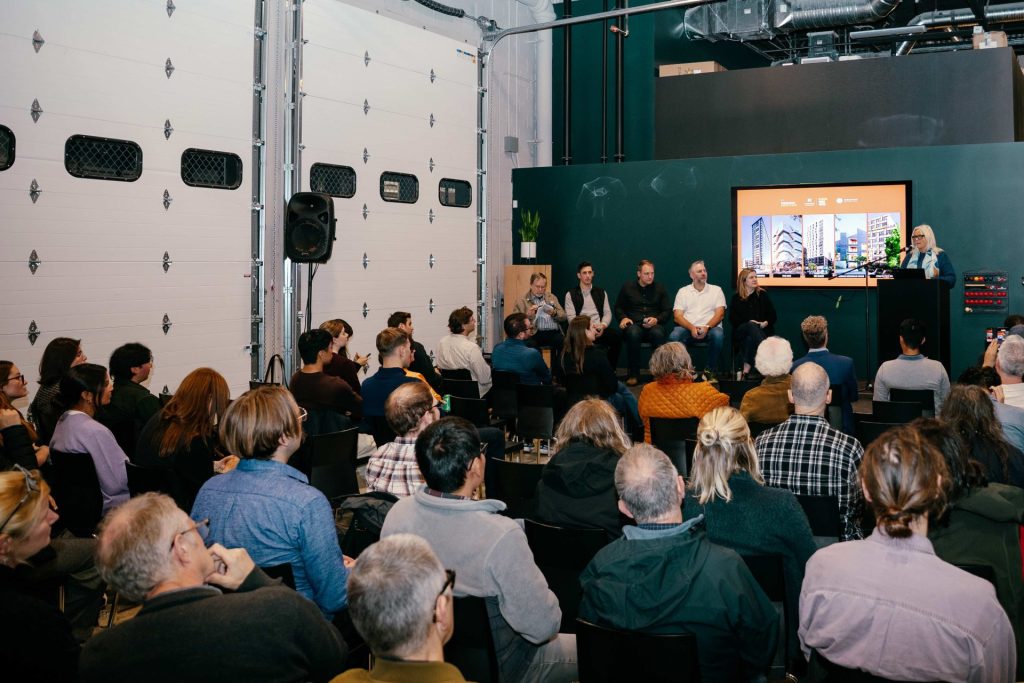
On Thursday, October 30th, Kindred Construction, in partnership with Urbanarium, hosted The Constructability Event to showcase the winners of Urbanarium’s latest design competition, Decoding Timber Towers.
This panel-style and networking event welcomed over 90 industry peers into Kindred Construction’s headquarters, where the feasibility of the top three winning proposals was brought to the stage and tested through the lenses of an architect, structural engineer, builder, manufacturer, and code consultant.
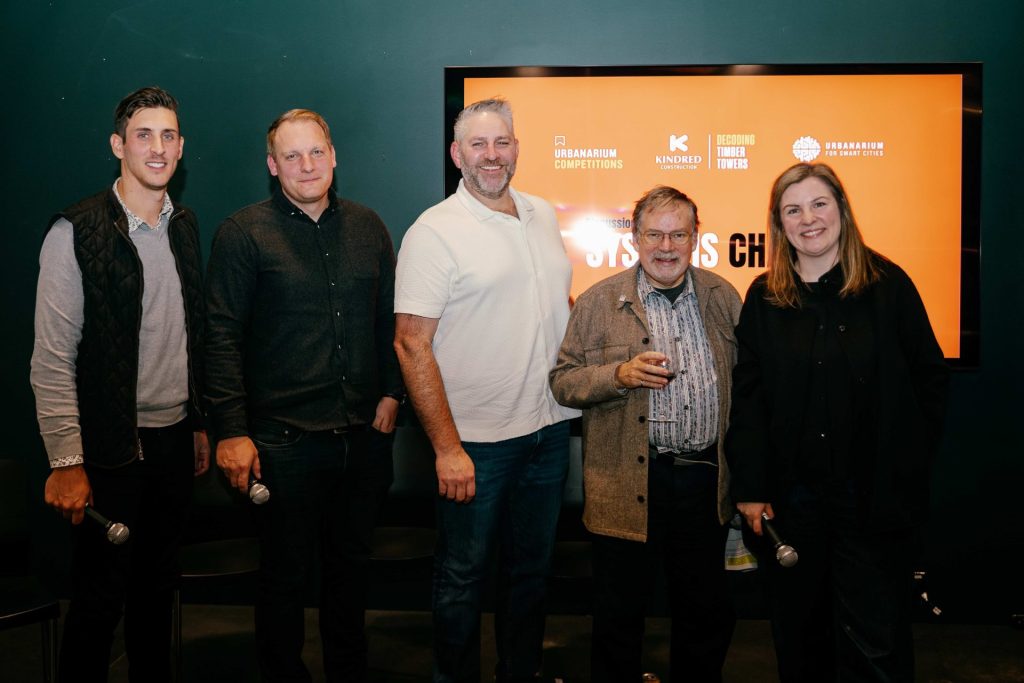
Moderated by Brenda Knights, Chief Executive Officer of the BC Indigenous Housing Society, the expert panel featured Kindred’s own Kenny Dempsey, Project Director, joined by Natalie Telewiak from Michael Green Architecture, Robert Jackson from Fast + Epp, Devon Parkinson from Kalesnikoff, and Andrew Hamsworth from GHL Consultants.
The interactive event sparked meaningful dialogue around the key hurdles and opportunities shaping the future of mass timber construction, bringing design ambition and constructability into the same conversation.
“Urbanarium competitions showcase the overlap between design thinking and policy needed to drive meaningful change. Each competition highlights potential policy impacts identified through the entries, which we then use to engage government, industry, residents, and schools,” remarked Amy Nugent, Executive Director at Urbanarium.
By translating these insights into broader conversations across sectors, Urbanarium helps turn innovative ideas into actionable strategies that influence how cities, and the construction industry, adapt to emerging challenges.
Inside The Constructability Event: Exploring the Real-World Feasibility of Tall Mass Timber Construction
The Constructability Event brought together architects, developers, builders, policymakers, and housing leaders who are shaping the next generation of sustainable construction. Together, they examined the three winning proposals to assess their real-world feasibility and discuss what it truly takes to deliver tall mass timber projects at scale.
The panelists unpacked the process from early design through to project completion, exploring the opportunities and challenges that arise along the way.
The discussions centered around three key themes:
From Design to Viability: How early design decisions influence feasibility, procurement flexibility, and downstream project success.
Building and Manufacturing Realities: What it really takes to bring a tall timber project to life, from cost considerations and manufacturing logistics to translating design intent into efficient, buildable solutions.
Codes, Policy, and Market Transformation: The systemic changes, incentives, and communication strategies needed to accelerate mass timber’s shift from niche innovation to mainstream practice.
Advancing Mass Timber: From Niche Innovation to Scalable Solution
Mass timber is often discussed as a sustainable alternative to concrete and steel, yet its widespread adoption has been slow. Despite growing interest, it’s still perceived as a niche material rather than a mainstream one. The reasons are complex, often revolving around cost and financing, codes and approvals, structural limitations, and the availability of skilled trades and construction knowledge.
At Kindred, we’re proud to be an active advocate for advancing sustainable construction in BC. Participating as co-sponsor to Urbanarium and in events such as this helps foster awareness, share practical insights, and bridge the gap between design concept and construction feasibility.
Throughout the panel discussion, several key themes emerged. Panelists explored how design decisions made early in the process can influence the feasibility of high-rise mass timber projects, balancing what’s achievable today with what remains aspirational or out of reach. They examined current building codes and policies that define the limits of timber high-rises, as well as where regulations are headed next.
Panelists also discussed the emerging data around fire safety and insurance, which play a major role in de-risking projects, and shared perspectives on construction logistics, including how builders optimize scheduling, sequencing, and tolerances in mass timber systems.
Equally important were conversations about communicating the climate return on investment of timber to clients, investors, and the broader public. Panelists underscored the importance of highlighting embodied carbon advantages and aligning sustainability benefits with market and policy priorities.
These conversations and affordable housing competitions are essential to making mass timber an accessible solution that addresses both affordability and climate imperatives, highlighting that widespread adoption will depend on continued collaboration across industry sectors to identify and overcome barriers uncovered through real-world experience, turning vision into practice.
For a look inside the event, view the recap reel on our social channels here.
About Urbanarium
Urbanarium is a Vancouver-based non-profit organization focused on urban planning that brings together leaders from academia, design, and construction to spark new ideas for sustainable, livable cities. Through competitions, debates, studios, talks, maps and tours, its goal is to become a recognized hub for advanced urban conversation and reliable information without political or ideological bias.
Share article
You might also be interested in
Kwantlen Non-Market Housing Initiative Reaches Structural Completion in Mission, BC
On May 20th, 2026, Kindred Construction joined the Kwantlen Nation, trade partners, and project partners on site to celebrate the structural completion of the Kwantlen Non-Market Housing initiative. The event provided an opportunity to recognize not only a major construction...
A recent Business in Vancouver article highlights Vienna House, a seven-storey affordable housing development, as a leading example of sustainable, high-performance construction, and explores how prefabrication can help accelerate housing delivery. Kindred Construction’s Project Director, Sean Binns, shares insights on...
On Wednesday, May 21st, 2025, Kindred Construction was honoured to take part in the ceremonial groundbreaking of the Kwantlen Non-Market Housing initiative, located on traditional Kwantlen Nation territory on Langley IR2 near Mission, BC. This 6-storey, 75,400 square-foot development will...